
"In the first half of 2024, German investment in China hit a new record high, continuing the momentum set in 2023 when German investment in China also reached unprecedented levels," said Hermann Simon, the German economist renowned as the "Father of Hidden Champions," in a recent exclusive interview with Xinhua. He noted that China has become the most important market for Germany's "hidden champion" companies and expressed strong confidence in the future of the Chinese economy.
This year marks the 10th anniversary of the establishment of the comprehensive strategic partnership between China and Germany. In Simon's view, Sino-German economic and trade relations are continuously deepening. Although competition exists between Chinese and German companies, cooperation remains dominant. Through mutual learning and exchange, the two sides demonstrate significant potential for achieving win-win outcomes.

Hermann Simon, the "Father of Hidden Champions," in an exclusive interview with Xinhua on August 27.
In recent years, some EU officials have distorted the industrial division of labor between China and Europe, which is based on market principles, into so-called "dependence on China," using this to advocate for "de-risking" policies toward China. Simon stated that corporate decisions are fundamentally driven by market laws, not artificial intervention. The continuous increase in German investment in China shows that the influence of the German government's economic policies toward China is weakening.
"In the German economy, the role and importance of the government are often overestimated. In reality, the government's influence on the German business community is not as significant as imagined. Business leaders make decisions based on their assessments of markets, growth, and other factors, with diversification being a key consideration," Simon said. "The Chinese market remains critically important and highly attractive to German companies, which is why they continue to increase their investments in China."
The concept of "hidden champions" was first proposed by Simon and typically refers to small and medium-sized enterprises that are global leaders in specific niche fields or industries but are not widely known to the public. Simon believes that "hidden champion" companies pursue market leadership through focused and in-depth strategies, continuous internationalization, and innovation. To some extent, "hidden champions" align with China's "little giant" enterprises that specialize in niche markets and innovate with unique technologies.
"Some Chinese 'hidden champions' have become major competitors for German 'hidden champions,'" Simon pointed out. The economic orientations of Germany and China are relatively similar, as both are engineering-driven economies rather than consumer-marketing-focused. In contrast, the United States has consumer-oriented companies like Coca-Cola and McDonald's, while China and Germany have more technology-driven business-to-business (B2B) models. Therefore, companies from the two countries are not only natural competitors but also important partners.
Simon emphasized that business ecosystems play a crucial role in the development of "hidden champions." A business ecosystem is a structure formed by multiple companies through long-term collaboration and shared expertise. In such ecosystems, companies worldwide collaborate closely based on trust, enabling small and medium-sized enterprises to develop complex products and systems that would be difficult to achieve independently. Thus, Chinese and German companies have vast opportunities for mutually beneficial cooperation within this framework.
He cited the example of the combustion chamber of SpaceX's rocket, which is manufactured by MK Technology, a German company with only 30 employees. The company specializes in producing highly complex investment casting systems. In SpaceX's rocket engineering, six MK systems successfully replaced 1,000 large 3D printers. Its success stems from close collaboration with partners from China, Germany, Israel, and France. This transnational business ecosystem fully demonstrates how collaboration achieves卓越的技术性能 (outstanding technical performance).

Hermann Simon, the "Father of Hidden Champions," in an exclusive interview with Xinhua on August 27.
The growth path of Chinese "hidden champions" is also the path of high-quality development for China's economy. Simon believes that Chinese companies excel in innovation and are leaders in fields such as telecommunications and railways. "For me, patents are an important indicator of future industrial competitiveness. China has become the global leader in international patent applications, now surpassing the United States to rank first."
Simon noted that in high-tech fields, many German "hidden champion" companies have established R&D centers and AI centers in China because they believe China offers superior conditions for developing AI products and processes. China is increasingly seen by many German companies as an incubation competence center for future industries.
"Since 'hidden champions' focus on narrow and specific markets, the scale of these markets is often small. In the global market, China accounts for only about 20%. Without globalization or internationalization, companies would miss out on 80% of the global market potential," Simon explained. In his view, if China wants to further catch up, it must explore global markets. In the process of globalization, China's "hidden champion" companies are still in a relatively early stage of development. In contrast, German "hidden champion" companies typically operate in more than 50 or even over 100 countries worldwide, while Chinese "hidden champion" companies often have a presence in fewer than 10 countries.
"We are experiencing a process of 'relative deglobalization,' where the relative importance of international trade in global GDP is weakening. At the same time, exports are being replaced by foreign direct investment. This means that German companies are no longer just exporting products from their home country but are establishing production facilities directly in China for localized manufacturing. Chinese companies are adopting similar strategies, such as CATL and BYD setting up production bases in Europe and other regions," Simon said. He believes this reflects the restructuring of global value chains, and Chinese companies should actively adapt to and seize this trend.
Simon believes that the Chinese market holds enormous potential. Germany has about 1,500 "hidden champion" companies, ranking first globally. Meanwhile, the number of Chinese "hidden champion" companies is growing rapidly. These global market leaders, driven by entrepreneurial spirit and a pursuit of excellence, will propel China's future economic growth.
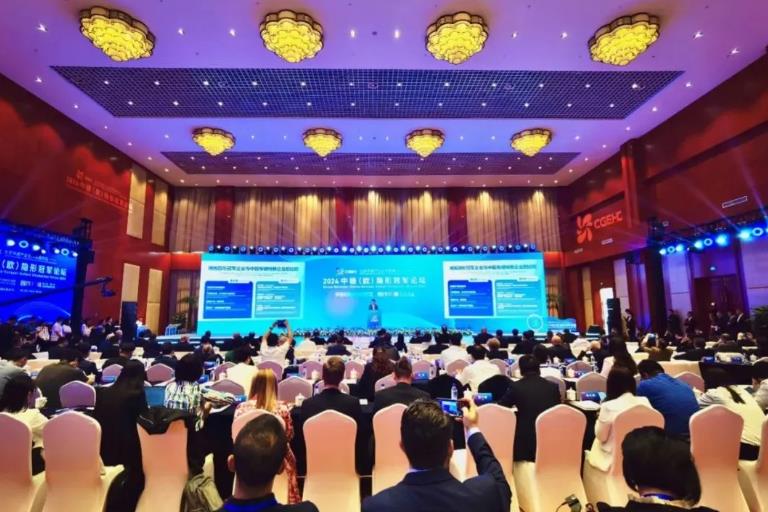
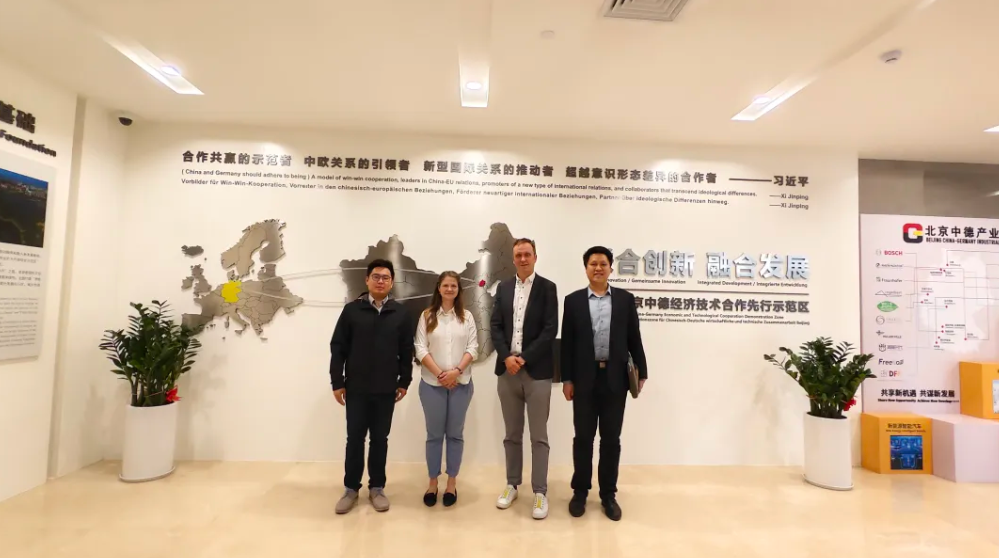
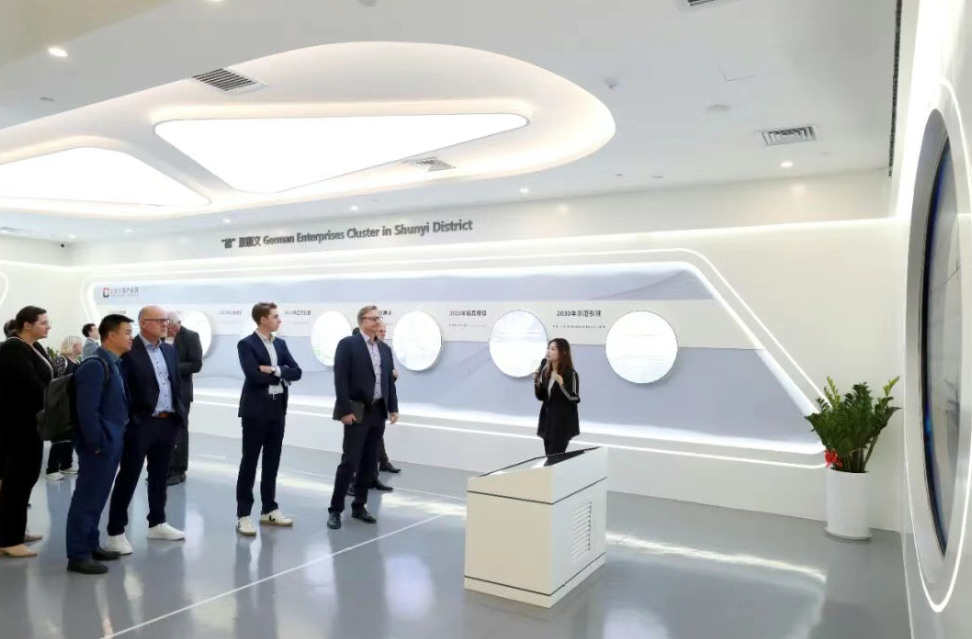
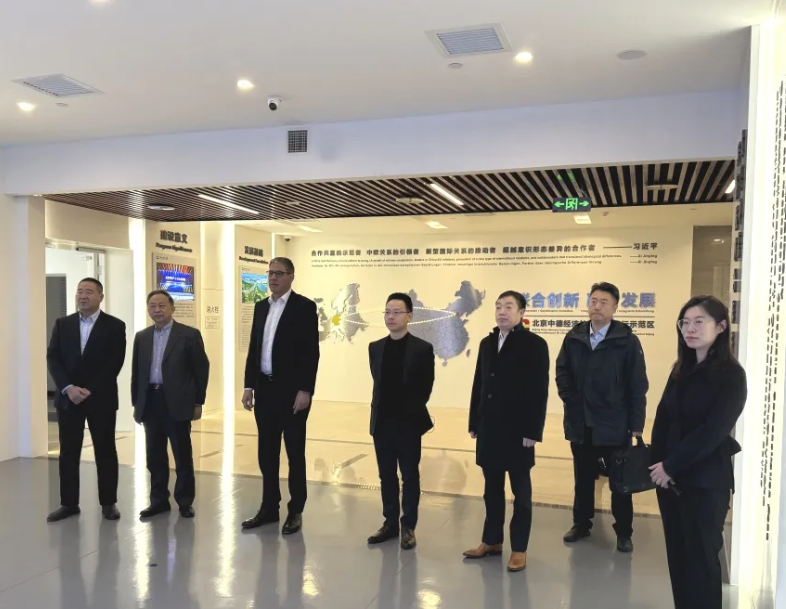
In May this year, the Beijing China-Germany Economic and Technological Cooperation Pilot Zone successfully hosted the 2024 China-Germany (Europe) Hidden Champions Forum. Nearly 100 foreign guests from 13 countries, including Germany and France, attended the event in Beijing. More than 50 hidden champion and "little giant" companies showcased their innovations, exchanged ideas on development, and shared experiences, collectively writing a new chapter in China-Germany (Europe) economic and technological cooperation.