
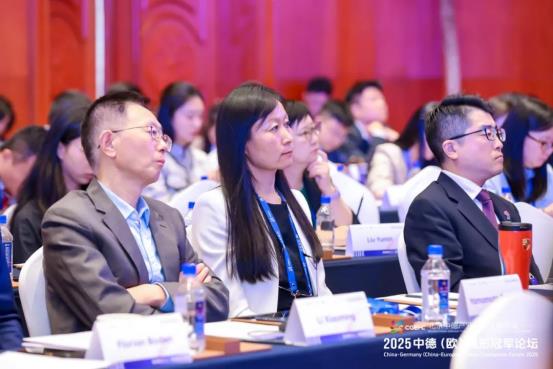
On May 26, the thematic event "China-Germany SME Cooperation Dialogue and Roundtable on China-Germany Industrial Chain Innovation and Integration" of the "Beijing China-Germany Industrial Cooperation Development Forum—2025 China-Germany (Europe) Hidden Champions Forum" was successfully held. Jointly organized by the International Cooperation Center of the National Development and Reform Commission and the People's Government of Shunyi District, Beijing, the event focused on the innovation and integration of the China-Germany industrial chain. Nearly 100 representatives from Chinese and German government agencies, industry associations, hidden champion enterprises, and financial institutions attended the event to discuss new opportunities for cooperation in the China-Germany industrial chain.
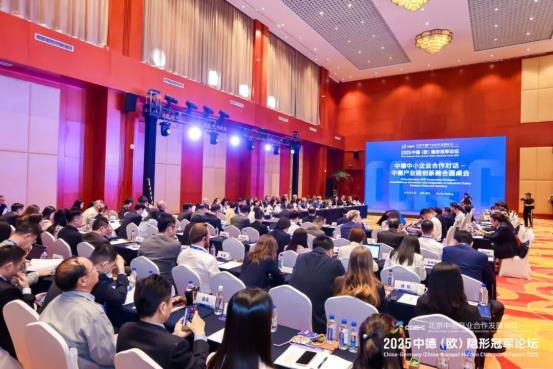
he event, as a key measure to implement the China-Germany SME open cooperation mechanism, focused on Germany’s leading industries such as green and low-carbon technologies, smart manufacturing, and biomedicine. For the first time, it adopted a "government event, enterprise-led" model, creating a practical dialogue platform for businesses from both countries. The initiative aimed to promote deeper cooperation and integration between leading enterprises and their upstream and downstream partners in key China-Germany collaborative industrial chains, while exploring new models and pathways for collaboration.
Fu Baozong, Deputy Director of the International Cooperation Center of the National Development and Reform Commission, presided over the roundtable. During the keynote speech segment, Jing Qin, Deputy Director-General of the Department of Foreign Capital and Overseas Investment of the National Development and Reform Commission, emphasized that the markets of China and Germany are interdependent, and the development of China-Germany relations holds significance beyond bilateral ties, impacting the entire world. She noted that China’s stable policy environment and vast market will continue to provide ideal investment opportunities for German companies, welcoming them to expand their investments in China and jointly safeguard the stability of global industrial and supply chains through mutual benefit and win-win outcomes.
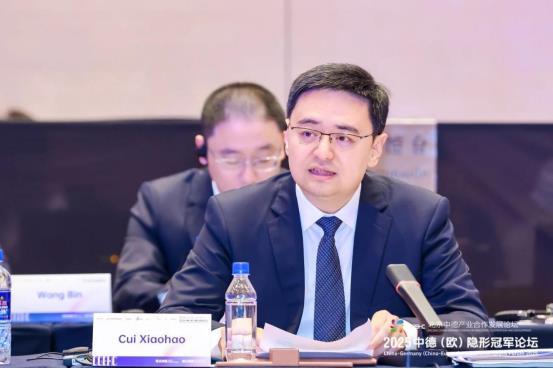
Cui Xiaohao, Deputy Secretary of the Shunyi District Committee and District Mayor of Beijing, highlighted Shunyi’s unique advantages as a "first stop" for German (European) enterprises investing in China. He stated that the district will continue to improve supporting facilities and provide comprehensive, one-stop services for German (European) companies operating in Shunyi.
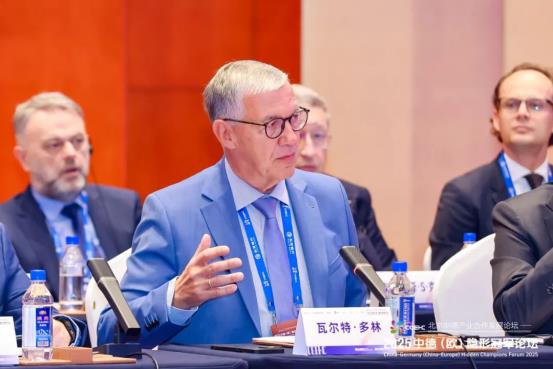
Walter Döring, Executive Chairman of the Senate of the Economy Europe and Chairman of the Akademie Deutscher Weltmarktführer (ADWM), stated: "China and Germany are critical variables in each other's industrial transformation. The openness of the Chinese market and Germany's technological strengths are deeply complementary, offering broad prospects for cooperation." Sun Wenkai, Vice President of the National Institute of Small and Medium Enterprises at Renmin University of China, proposed: "Accelerating the establishment of mechanisms for mutual recognition of technical standards and joint protection of intellectual property rights between Chinese and German SMEs will lay a foundation of cooperation and mutual trust for deepening collaborative innovation in industrial chains and nurturing global hidden champion enterprises."
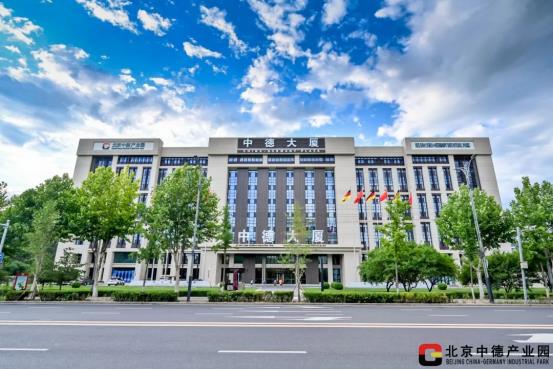
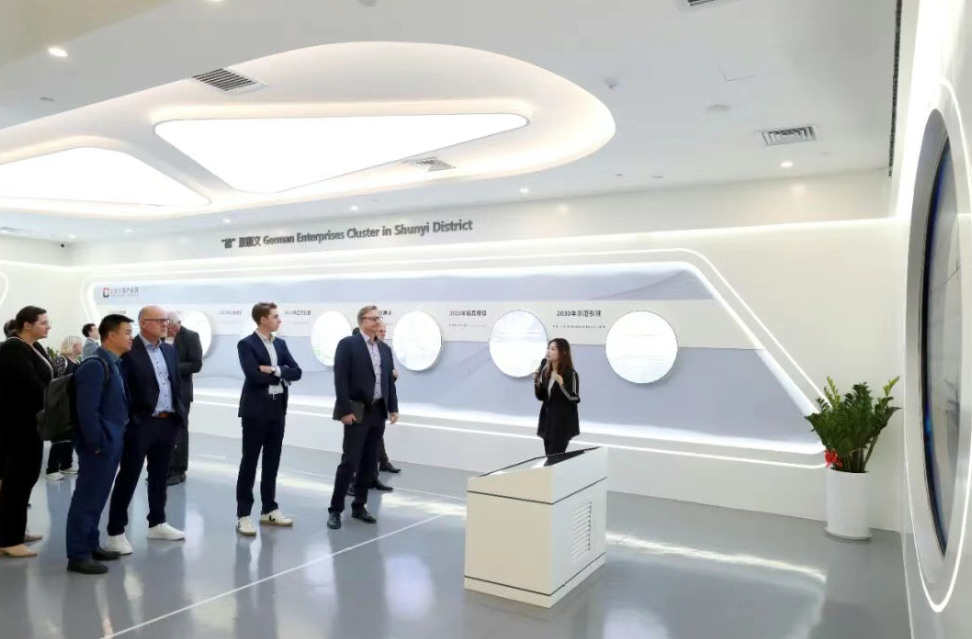
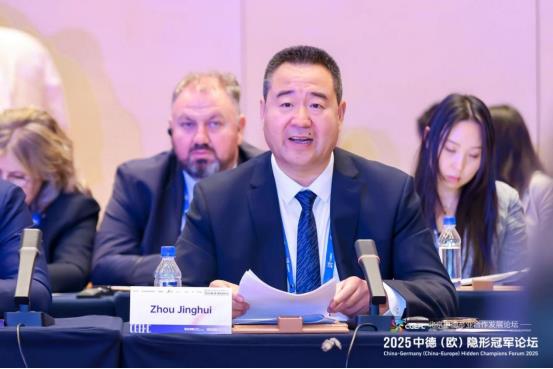
Zhou Jinghui, Director of the Beijing Shunyi District Bureau of Economy and Information Technology and Director of the Beijing China-Germany International Cooperation Industrial Park Management Committee, delivered a thematic presentation on the development of the Beijing China-Germany Economic and Technological Cooperation Pilot Demonstration Zone. She extended a warm welcome to hidden champion enterprises from Germany (Europe) to establish and grow their operations in the zone.
During the thematic discussion session, representatives from German companies and institutions—including NRW Global Business, BMW Group, Wilo, Deutsche Gesellschaft für Internationale Zusammenarbeit (GIZ), SAP, Siemens (China), Knorr-Bremse Group, Siemens Healthineers, the German Society for Stem Cell Research, and Landesbank Baden-Württemberg (LBBW)—engaged with Chinese counterparts from organizations such as the China EV100, CETC Development Planning Research Institute, Tiandi Science & Technology, the University of Hong Kong, CRRC Capital, Sinopharm Group, and Site Precision Pharmaceuticals. The dialogue focused on core issues including technological R&D, mutual recognition of standards, and cross-border investment and financing. Participants exchanged insights, explored collaborative pathways, and discussed innovation opportunities, ultimately reaching a consensus on promoting synergistic innovation across upstream and downstream segments of the industrial chain.
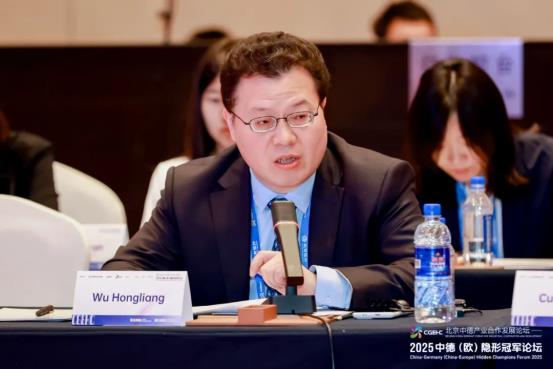
Finally, Wu Hongliang, Director of the International Cooperation Center of the National Development and Reform Commission, stated: "This roundtable, focusing on the innovation and integration of China-Germany industrial chains, is an important component of the cooperation between Chinese and German small and medium-sized enterprises. The International Cooperation Center is committed to implementing the consensus reached by the leaders of both countries, strengthening communication and coordination with German partners, and leveraging the Beijing China-Germany Economic and Technological Cooperation Pilot Demonstration Zone to provide continued and greater support for extensive collaboration between Chinese and German SMEs. Together, we aim to build an open and cooperative ecosystem and promote the implementation of more practical outcomes."
The event has established multiple "golden bridges" for Chinese and German small and medium-sized enterprises (SMEs). Through government-enterprise collaboration and industrial chain alignment, it has strengthened practical exchanges among hidden champion enterprises, specialized and sophisticated SMEs, upstream and downstream industrial chain partners, government agencies, and other stakeholders from both countries, fostering mutual learning and shared development outcomes. As the first national-level Sino-German and Sino-European cooperation park with a theme centered on "economic and technological collaboration," approved by the National Development and Reform Commission, the Beijing China-Germany Economic and Technological Cooperation Pilot Demonstration Zone will continue to uphold the philosophy of "joint innovation and integrated development." Under the framework of the China-Germany SME open cooperation mechanism, the zone will persistently integrate resources across the industrial chain, promote technological synergy and market interoperability, expand the "circle of friends" in industry-academia-research-finance collaboration, and pioneer new paradigms of transnational cooperation characterized by "technology sharing, market cooperation, and achievement sharing."