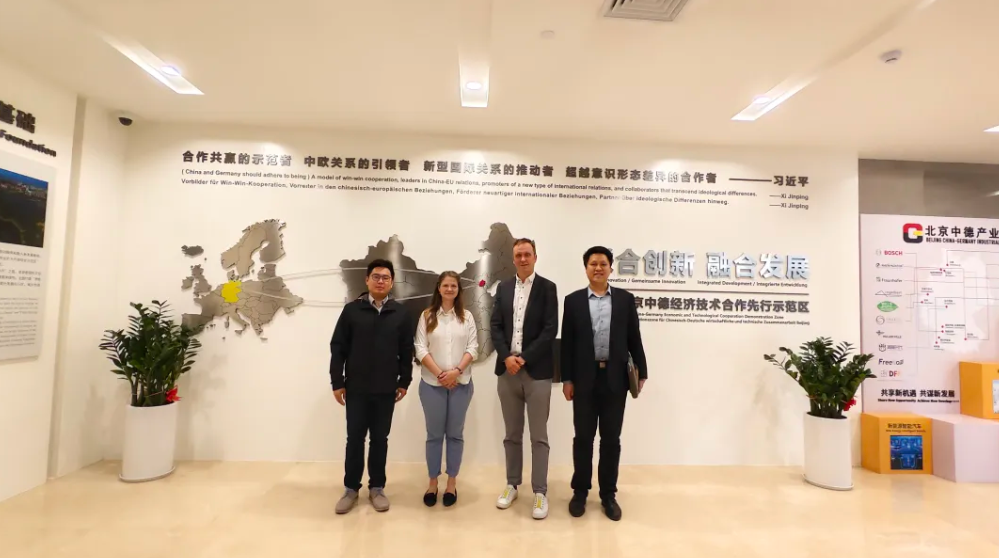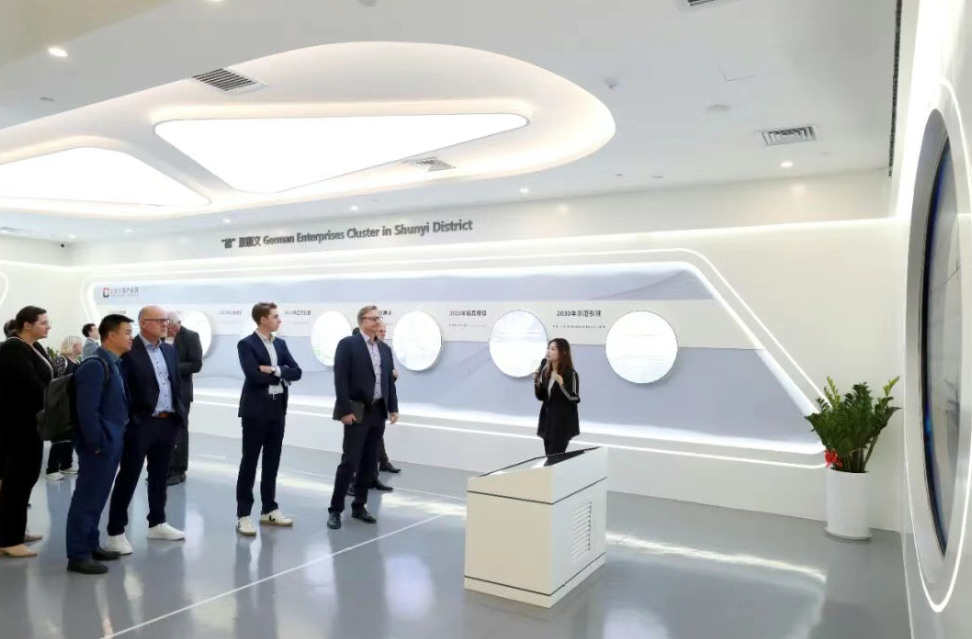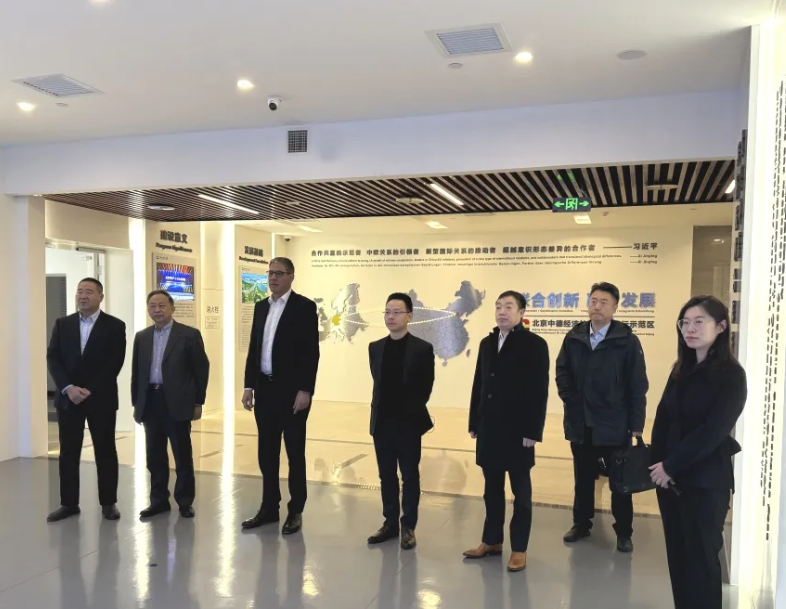

In order to further popularize IPR knowledge, enhance the awareness of Chinese enterprises on IPR protection overseas and improve their ability to deal with risks in "going global", a session on overseas IPR protection for Chinese enterprises in Germany was held online recently by Beijing China-Germany Industrial Park, Beijing Municipal Intellectual Property Office and Beijing Public Service Center for Intellectual Property. It was one of the activities of the German theme month.
Beijing IPR Rights Protection Assistance Center, Beijing IPR Public Service Center (Shunyi District), CCPIT Commercial Law Service Center and German law firm Starke Legal as well as more than 50 enterprises participated in the online session.
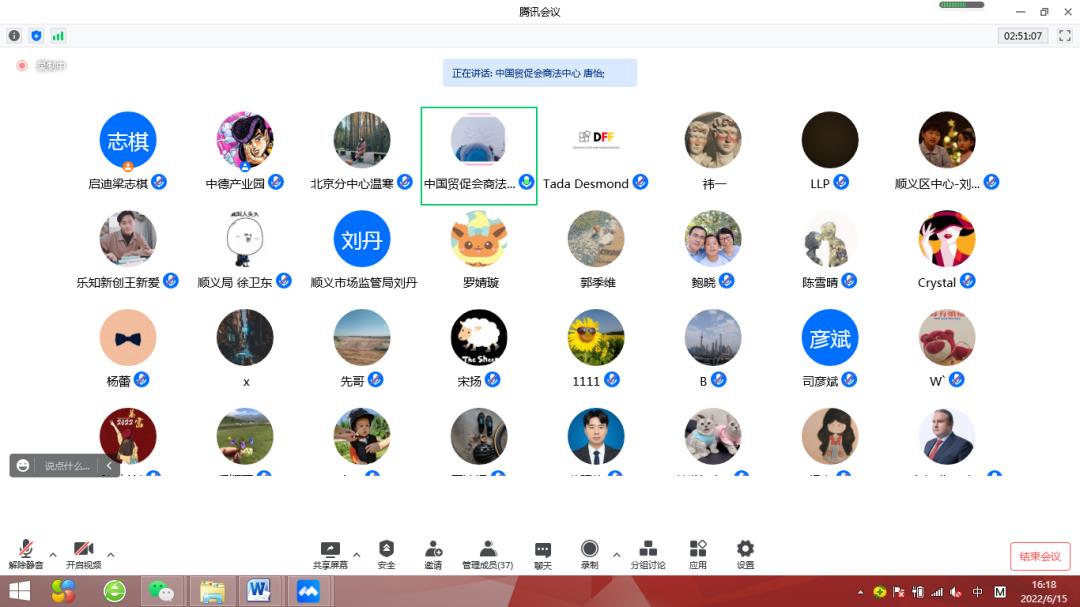
The services involving IPR protection assistance offered by the Beijing China-Germany Industrial Park were introduced during the session.
Li Guangming, deputy head of the international communication and cooperation department of Beijing Municipal Intellectual Property Office, introduced the work of the department.
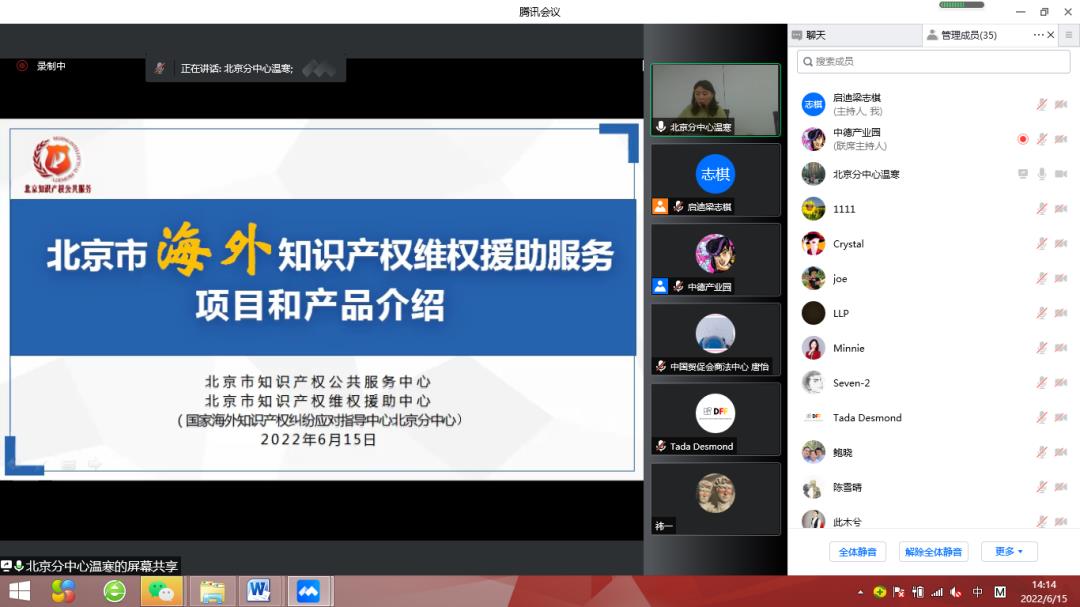
Wen Hanzhen, head of the department of government services and overseas rights protection of Beijing IPR Public Service Center introduced projects and products of overseas IPR protection assistance service of Beijing municipality, giving detailed explanation on typical models of overseas IPR disputes encountering Chinese enterprises and their major difficulties, as well as related services offered by the center, which would offer guarantee for dealing with the cases.
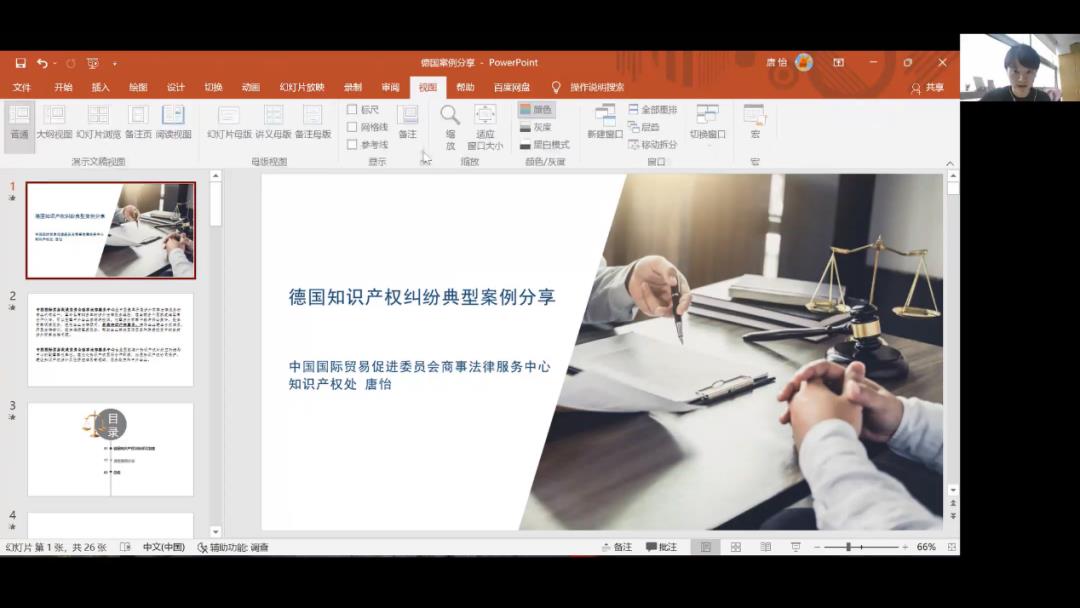
Tang Yi, deputy head of the department of IPR, CCPIT Commercial Law Service Center, gave an introduction of the intellectual property litigation system in Germany and offered analysis of two classical international IPR cases, which offered effective support on litigation for enterprises.
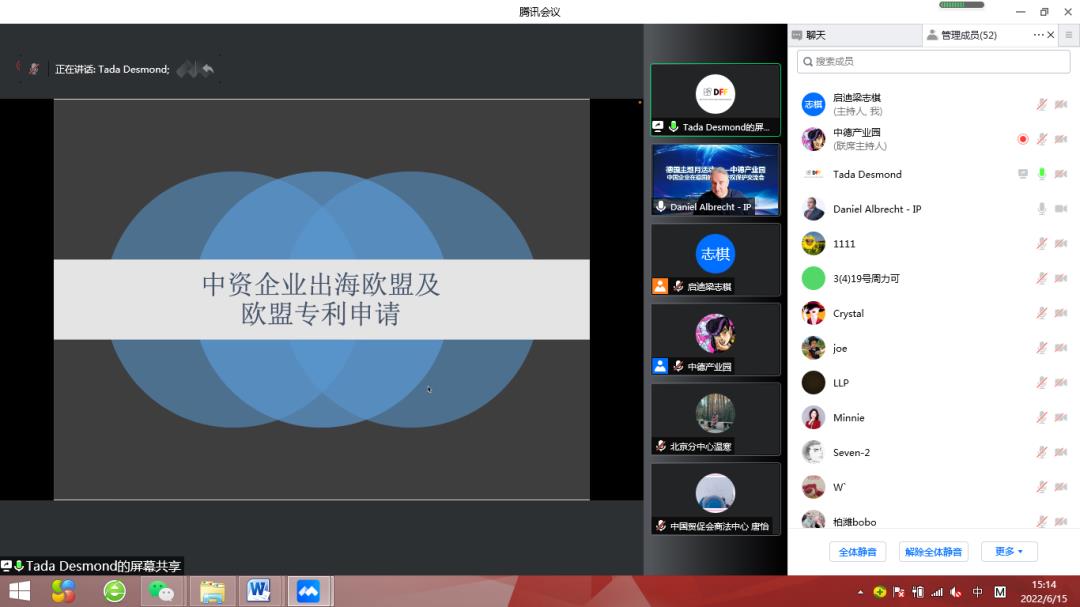
Daniel Albrecht, CEO of Starke Legal and an expert on IPR protection for SMEs in EU, gave an introduction of the definition, classification of trademarks in China and Germany and explained how Chinese-invested enterprises can apply for patents in Germany and EU. Statistics show the number of trademarks of Chinese enterprises registered in Germany is remarkable. Trademark registration processes as well as information needed, hurdles, fees involved and differences in registration in both countries which were explained by Albrecht offered valuable suggestions for Chinese enterprises.
During the Q&A, the representatives of the participating enterprises had in-depth discussions with the experts on the problems they actually faced.
The China-Germany Industrial Park has already carried out four IPR training sessions to help enterprises improve their IPR protection and dispute solving abilities. To further improve the awareness of IPR among enterprises, the Park will continue to integrate resources, enhance interaction and communication between enterprises and experts, improve the IPR management level of innovative enterprises, and empower the high-quality development of enterprises with IPR.