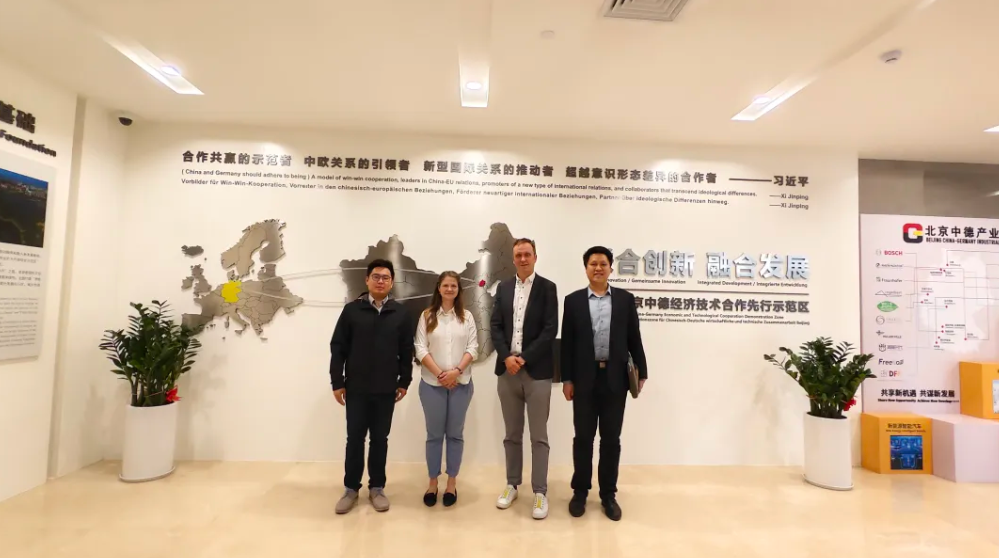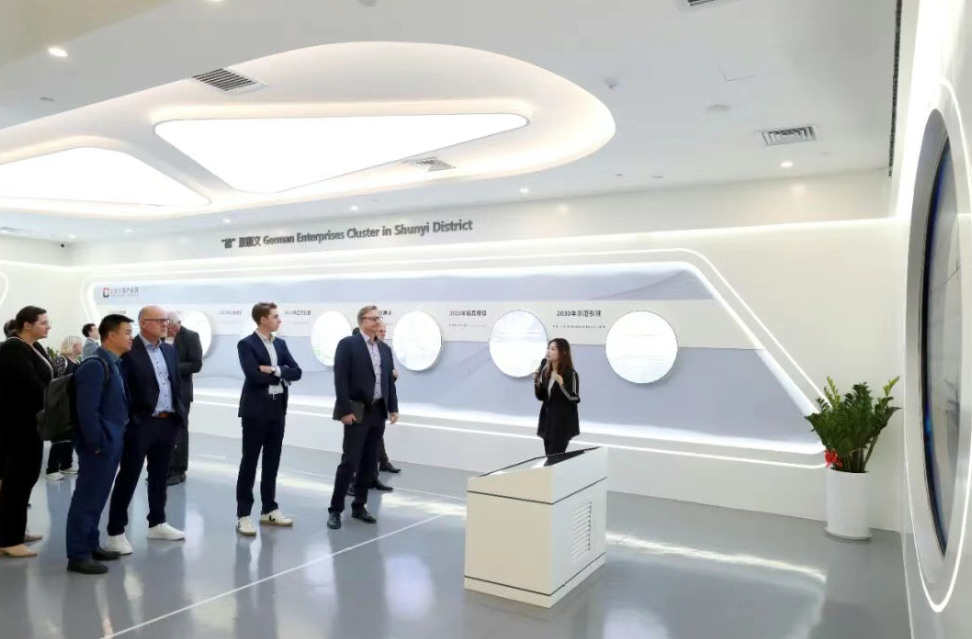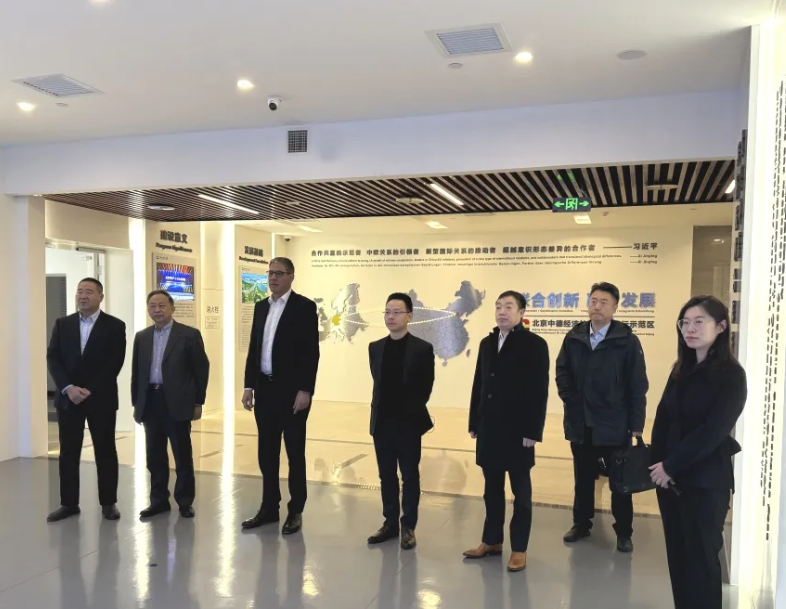

According to a press conference held by the Shunyi district on the construction of "Two Zones", twenty-three key projects including the world's top 500 Bosch Industry 4.0 Innovation Center, the second global headquarters of Wilo pumps, and Arges equipment manufacturing have been launched in the Beijing China-Germany Industrial Park, with 38 projects in negotiation. It signifies the change from the stage of planning and design to the stage of implementation.
As China's first and only cooperation park featuring "economic and technical cooperation" with Germany, the Beijing China-Germany Industrial Park is an important platform to promote international industrial innovation and cooperation.
The park is planned to be 20 square kilometers. With the "Two Zones" - the starting area and the expansion zone - as the core, the park has achieved industrial synergy, spatial linkage and industry-city integration by connecting with the surrounding living and production facilities such as the Capital Airport, the New International Exhibition Center, the Central Villa Area, Shine Hills Town, and the Airport Area B.
In the future, the Beijing Innovation Industry Cluster Demonstration Zone (Shunyi) will radiate 100 square kilometers. It will focus on key areas such as new energy smart vehicles, smart equipment, industrial Internet, technology services, business exhibitions, and digital trade.
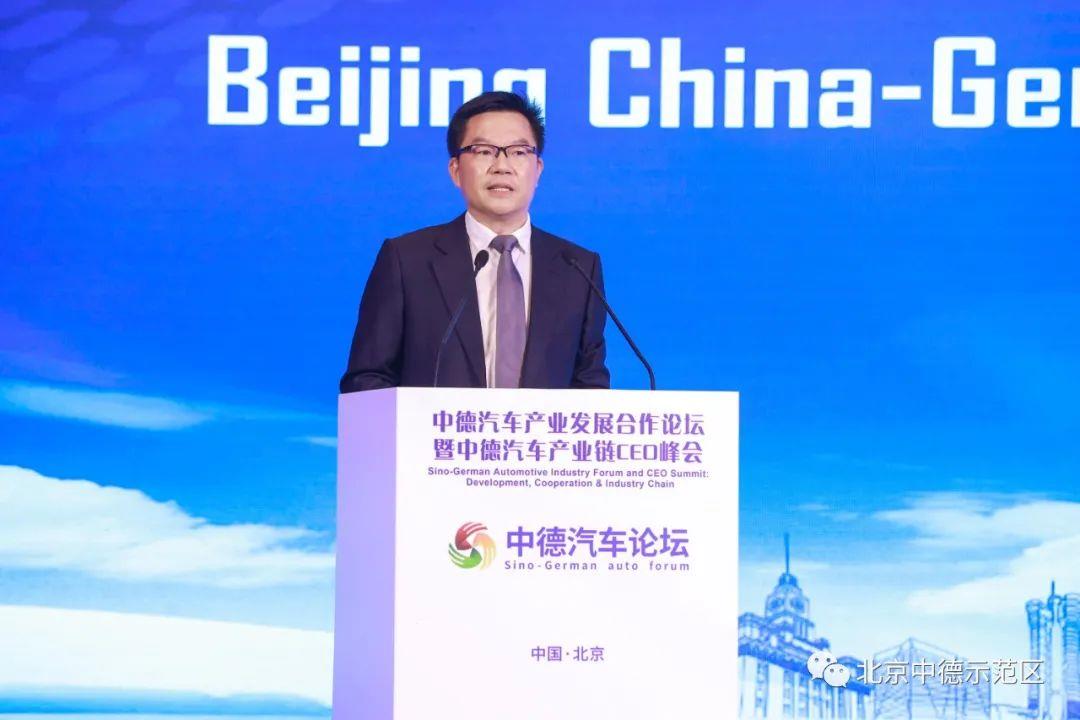
director of the Shunyi District Economy and Information Technology Bureau, said that in terms of industrial cooperation promotion, Shunyi has successively organized Sino-German Intelligent Manufacturing Industry Forum, Sino-German Hidden Champion Summit Forum, HICOOL Global Entrepreneurs Summit Germany Special Session, etc. More than 30 professional institutions, including the Chamber of Commerce, the German Center, the German-Chinese Economic Association, and the German Automobile Industry Association have established an effective docking mechanism to promote the sharing of high-quality resources.
Overcoming the impact of the COVID-19 epidemic, three liaison offices in Germany have organized 53 online promotion activities, contacted a number of innovative projects, and further expanded the resource channels for local projects in Germany.
With a focus on key tasks such as the top-level planning and design of the industrial park, infrastructure carrying, urban governance, “German-alike” service supply and space resource supply, we have compiled and completed the infrastructure construction work plan and project table, and identified 5 aspects, 16 key tasks and 44 specific projects with a total investment of about 6.7 billion yuan.
Meanwhile, with a focus on the construction of the "Two Zones", we have jointed cooperation with the national think tank China Center for International Economic Exchanges and China-Germany Intelligent Manufacturing Industry Association jointly to carry out research on the development strategy of the China-Germany Economic and Technological Cooperation Pilot Demonstration Zone in Beijing under the background of China-EU Comprehensive Agreement on Investment.
We’ve also collected eleven policy demands such as separate tax IDs for Ameco aviation parts and general civil industrial products, VAT exemption for HEIDENHAIN exchange and maintenance, and cross-border flow of corporate data. At the same time, we’ve studied and formulated special policies for demonstration zones, and provided special support for foreign investment, intellectual property rights, capital increase and production expansion, and achievement transformation.
The industrial park is positioned as a clustering area of German advanced manufacturing industries, a strategic highland for the development of hidden champions in China and Germany and an important window of China-Germany communication and open innovation.
The park will focus on key areas such as new energy intelligent vehicles, intelligent equipment, industrial Internet, sci-tech services, business exhibitions and digital trade. With the "industrial chain" as the core, it will aim at high-value links such as advanced manufacturing, R&D innovation, and integrated applications, and attract German and other European hidden champion enterprises to gather.
It will explore a more internationally competitive opening-up mechanism and innovation environment, promote all-round in-depth cooperation on industrial development, technological innovation, talent flow, information exchange, and build a gateway between China and Germany and even Europe.